


Dr. Ghassan Abu Sittah returned from the war on Gaza after 43 days of hell and horror, leaving only after it became impossible for him to perform his life-saving surgeries as Israel committed medicide. He launched into a mission to tell the world what he had witnessed, travelling from country to country and forum to forum, including the International Criminal Court.
Ghassan told his story of his time spent in Gaza, moving between hospitals, treating wounds, witnessing displacement and suffering, and sheltering from being killed by Israeli bombs, sniper fire and quad-copters. He found himself in the midst of massacres and war crimes when al-Ahli Baptist Hospital was bombed, tending to horrendous injuries and bearing witness to unimaginable horror at the same time. His words were essential to raising awareness about the genocide in Gaza and the deliberate targeting of medical and health services as a weapon of war.
Ghassan is no stranger to wars, he has worked in Iraq, South Lebanon, Yemen, Syria and Gaza for over two decades. In fact, the 2023 war on Gaza is his fifth time going to Gaza to support medical colleagues and healthcare workers and work alongside them. But this time it was different. It was far worse. It is this realization that drives him to rush from meeting to meeting, from agency to agency, from decision maker to decision maker. From giving testimony of war crimes to UN agencies to giving testimony at Scotland Yard.
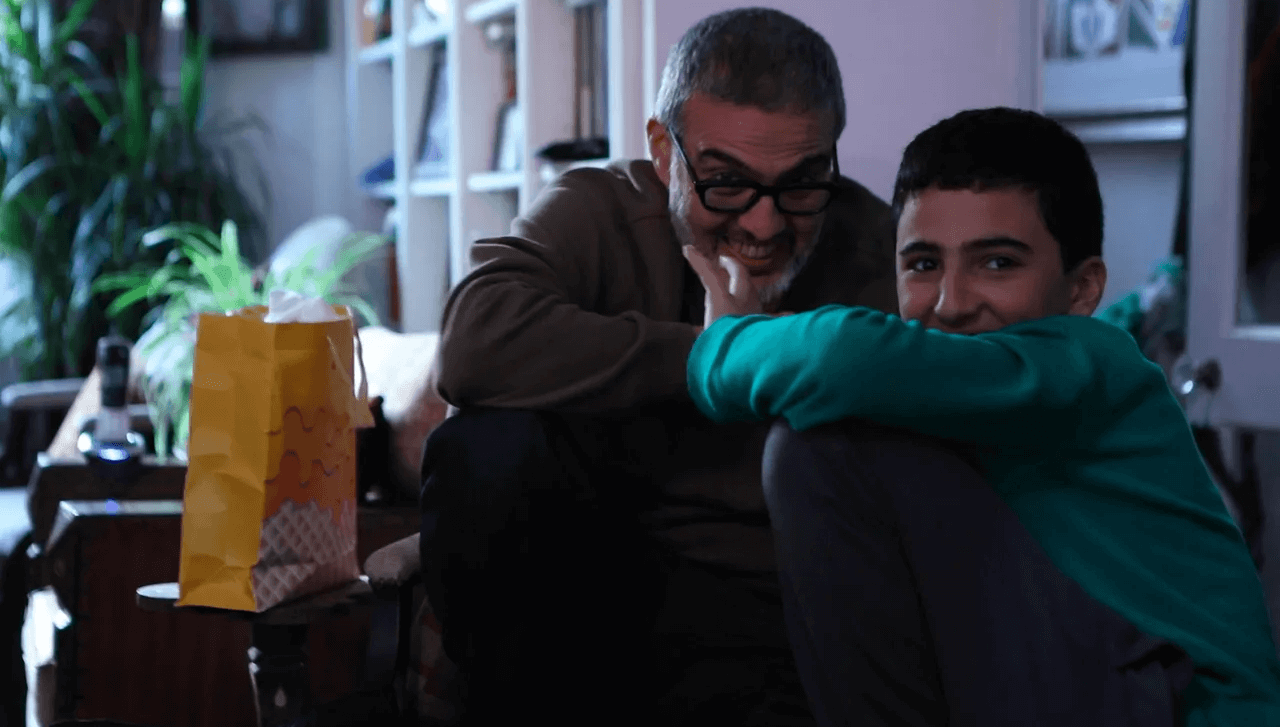
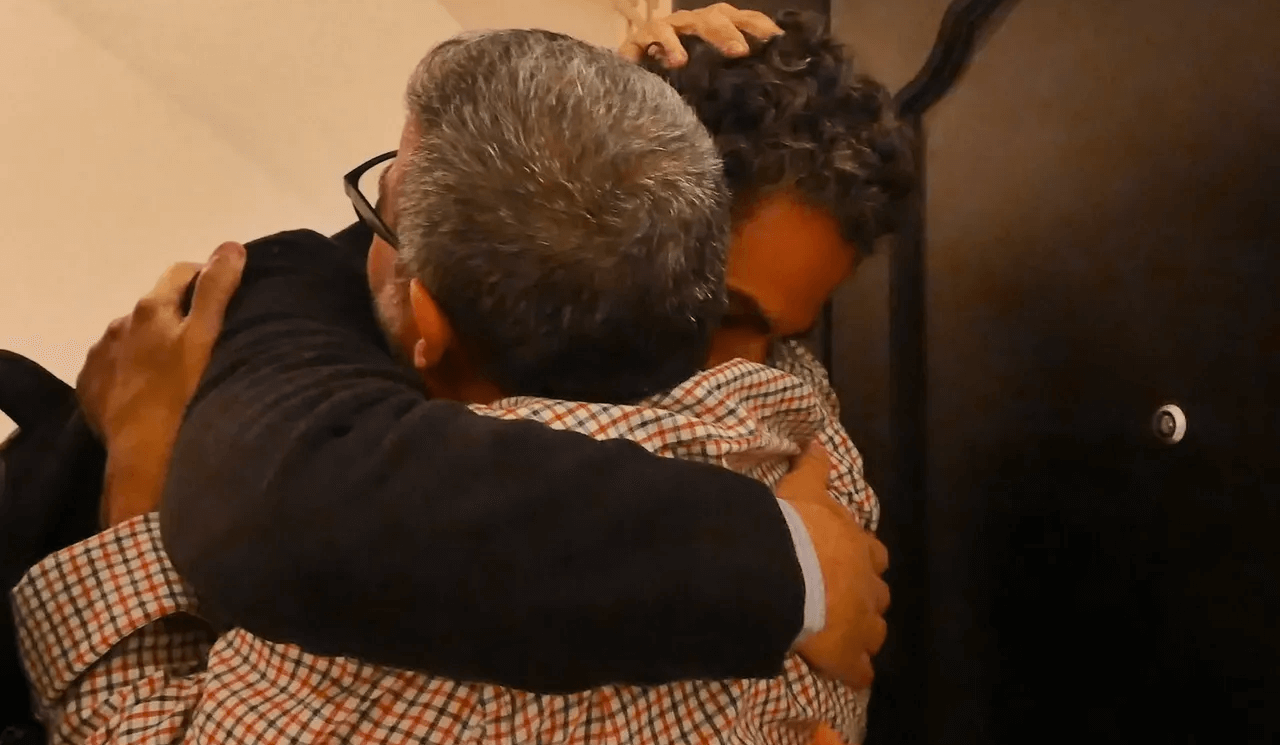
We have been close friends of Ghassan’s for over fifteen years. We have witnessed first-hand how he stops everything he’s doing and rushes to Gaza and elsewhere where his expertise is needed. Our friendship with Ghassan extends to a friendship and closeness with his immediate and extended family. This has allowed us to “accompany him” over time, and to discuss his work and the impact it has on him in depth.
By noon on October 7th, 2023 Ghassan had sent a WhatsApp voice note to let us know that he was “going to Cairo tomorrow and from there to Gaza”. Ghassan did not hesitate for more than a few minutes to consider his safety or anything else, he just wanted to make sure that he arrived before the Israeli army inevitably closed off the borders. The text messages and voice notes from Gaza continued on a daily basis. Most were heartbreaking, yet some made us laugh out loud. Ghassan was just being himself, doing what he felt must be done.
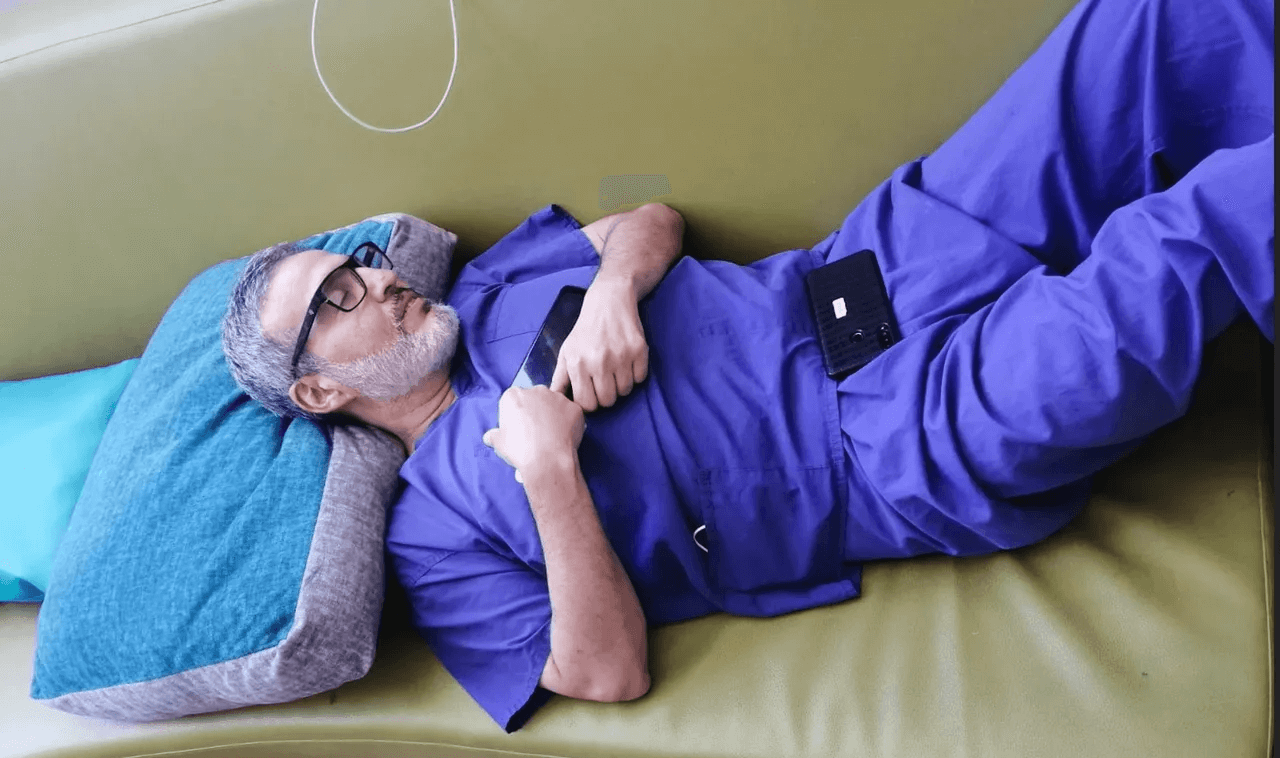
The famous “press conference” following the al-Ahli hospital massacre, and the harrowed look in Ghassan’s eyes, was a pivotal moment. We began to think about the need to document the story from his perspective, as a witness to genocide and medicide. As soon as the text message arrived on November 19th that he was on his way out heading to Amman, we immediately jumped on a flight. We needed to capture his raw testimony of his experiences. He was exhausted from illness, lack of sleep and food. Yet, he made time to be interviewed and to tell his of what he witnessed.
Our friendship with Ghassan has allowed us the privilege to ask difficult questions. To understand from him Why? Why do you go? What makes you do it?
As we explored these themes, it became clear what it was that people found inspiring: his unshakable commitment to Palestine and his state of passion that fuels the fight for justice and a free Palestine.

Dr. Ghassan Abu-Sittah is a highly praised and much accoladed British-Palestinian Associate Professor of Surgery and a Plastic & Reconstructive Surgeon, with a reputation as one of the world’s leading specialists in craniofacial surgery, facial aesthetics, cleft lip and palate surgery, and trauma related injuries.
Dr. Abu-Sittah was born and raised in Kuwait. He completed his medical education at the University of Glasgow in the U.K. and his postgraduate residency training in London, where he underwent 3 fellowships: Pediatric Craniofacial Surgery at Great Ormond Street Hospital for Sick Kids (GOS); Cleft Surgery at GOS and a further fellowship in Trauma Reconstruction at the Royal London Hospital.
In 2012, he became Head of the Division of Plastic and Reconstructive Surgery at the American University of Beirut Medical Center and Clinical Lead of its Pediatric War Injuries Program and War Injuries Multidisciplinary Clinic. In 2015, he co-founded and became director of the Conflict Medicine Program at Global Health Institute at the American University of Beirut. He returned to the U.K. in 2020 to a practice in Plastic and Reconstructive Surgery in the private sector.
He is an Honorary Senior Clinical Lecturer at the Center for Blast Injury Studies at Imperial College, University of London and Visiting Senior Lecturer at the Conflict & Health Research Group at Kings College, University of London.
He is Clinical Lead for the Operational Trauma Initiative at the World Health Organization’s EMRO Office and serves on the board of directors of INARA, a charity dedicated to providing reconstructive surgery to war injured children in the Middle East, and on the Board of Trustees of the U.K.-based Medical Aid for Palestinians. He also serves on the U.K.’s National Institute of Health Research (NIHR) International Funding Committee.
Dr. Abu-Sittah has published extensively on the health consequences of prolonged conflict and on war injuries including medical text books, “Reconstructing the War Injured Patient” and “Treating the War Injured Child.”
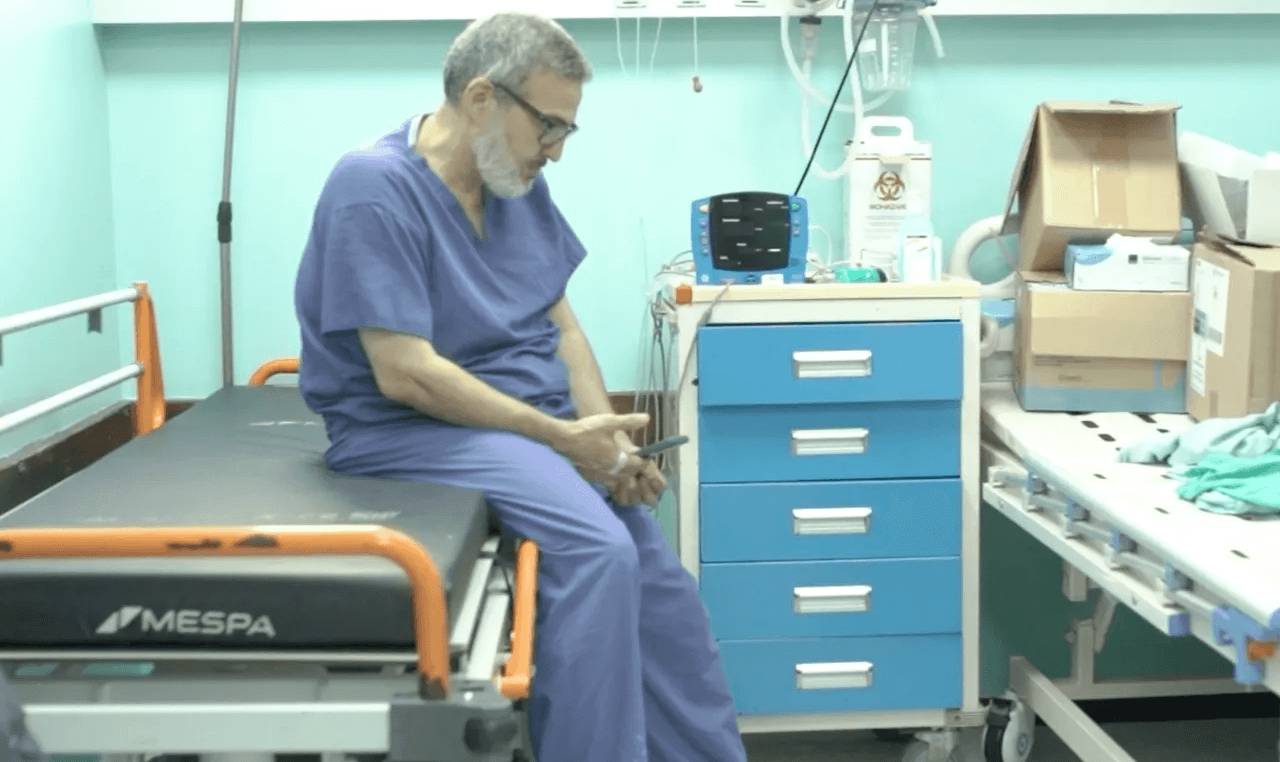
He has worked as a war surgeon in Yemen, Iraq, Syria, South Lebanon and during the 5 wars on the Gaza Strip. Dr. Abu-Sittah arrived in Gaza on October 9th, 2023 and spent 43 days treating patients at al-Shifa and al-Ahli hospitals as the genocide was taking place. He was operating on wounded patients at al-Ahli when the hospital was bombed.
In March 2024, Dr. Abu-Sittah was elected as Rector of Glasgow University.
In June 2024, he received an Honorary Doctorate from the American University of Beirut, and the university has recently established a Chair in Conflict Medicine in his name of which he was named Professor.










For further inquiries about the film or impact campaign, please reach out to Forward Film Production.
Website By Fusion Second